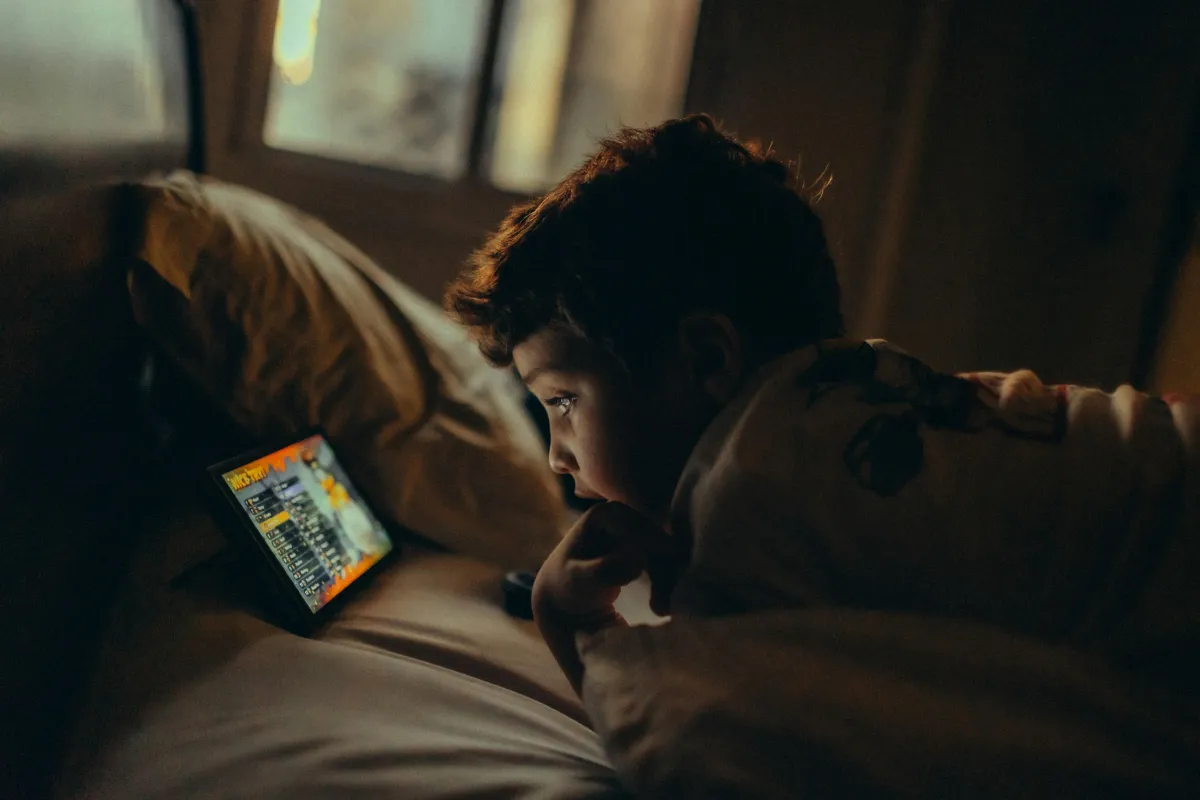
Do Screens Really Affect Children’s Sleep?
I’ll start with my own bias here. I couldn’t imagine a world without screens.
I use them, my family uses them and I certainly don’t think they are inherently bad for children. Screen time can be educational, it can help children connect with other people and, perhaps just as importantly, it can be fun. We all deserve access to things we enjoy.
That doesn’t mean children need unlimited access to screens at any time of the day or night. But I do think we need to move away from the idea that seeing a child with an iPad in the evening automatically means we have found the reason they aren’t sleeping.
There is evidence linking screen time and children’s sleep, but as with most things around sleep, it is a little more complicated than “screens are bad before bed”.
How can screens affect sleep?
One possible factor is light. Our body clock responds to light and darkness, so bright light in the evening may interfere with some of the natural signals involved in preparing for sleep.
But I’m also interested in what the child is actually doing on the screen. Watching a familiar television programme is quite different from playing a highly interactive game or moving rapidly between short videos. Some activities are much more engaging and harder to stop than others.
Newer research gives us an interesting perspective on this. A 2024 study objectively measured screen use and sleep in young people aged 11 to 14. Screen use during the two hours before bed wasn’t associated with most of the sleep measures researchers looked at. Using screens once they were actually in bed, particularly for interactive activities, was associated with later sleep.
Interestingly, the young people didn’t take longer to fall asleep once they stopped using their screens and actually tried to sleep.
This is an important distinction. A child can go to sleep later because a screen has made it difficult for them to fall asleep, or they can go to sleep later simply because they are still using it.
Most of us can probably relate to picking up our phone for five minutes and suddenly realising half an hour has disappeared!
Research with younger children has found some benefit from reducing screen use before bed, so I certainly wouldn’t say screens don’t affect sleep. Instead, I think we need to look at the individual child, their age, what they are doing and what actually happens around bedtime.
Sometimes the problem is turning it off
This is where my behaviour analyst brain becomes particularly interested.
Imagine being completely absorbed in something you love and suddenly being told, “Right, turn it off. Bedtime.”
For children who find transitions difficult, stopping a highly preferred activity can be really hard. We can end up with distress, negotiation, repeated requests for one more video and everyone arriving at bedtime frustrated.
In that situation, I wouldn’t necessarily start by banning the screen. I’d want to know whether the child needs more support with the transition.
A countdown, visual timer or predictable finishing point can help. “When this episode finishes, the television goes off” may be much easier to understand than suddenly ending it halfway through.
I’d also think about what comes next. We often focus on what we are taking away without considering what we are asking the child to move towards.
What about autistic children?
For some autistic children, screen time may serve an important purpose. A familiar programme can be predictable and enjoyable. Rewatching the same videos might be comforting. A tablet might provide some much needed downtime after a day filled with demands, interaction and sensory input.
That doesn’t mean I would never recommend changing screen use. If it appears to be contributing to a child’s sleep difficulty, then of course it is worth exploring.
But I wouldn’t remove something a child enjoys simply because it doesn’t fit somebody else’s idea of the perfect bedtime routine.
Instead, I want to ask: what purpose is the screen serving for this child?
Is screen time actually affecting your child’s sleep?
If you’re not sure, spend a few evenings observing what actually happens.
What is your child doing on the screen? When do they stop? How do they cope when it ends? When do they actually attempt to sleep, and how long does it take them to fall asleep once they do?
That last distinction can tell us a lot.
If the tablet goes off at 8pm and your child is still awake at 9.30pm, I’d want to investigate why they are struggling to fall asleep.
If they are happily watching YouTube until 9.30pm and fall asleep soon after it is switched off, we may be looking at something different. The screen may simply be delaying the opportunity to sleep.
Rather than changing everything at once, try one small adjustment and see what happens. You might finish screens slightly earlier, change the type of content or introduce a predictable activity between the screen and bedtime.
What if screens aren’t the problem?
Parents often come to me having already tried the usual sleep advice. They have removed screens, introduced a bedtime routine, bought blackout blinds and tried to make everything as calming as possible, yet their child is still struggling to sleep.
At that point, continuing to blame the tablet isn’t particularly useful.
Sleep difficulties can be influenced by sleep timing, anxiety, sensory needs, routines, the environment, sleep associations and patterns of behaviour. Sometimes what is happening during the day is just as important as what happens immediately before bed.
This is why my approach starts with assessment rather than a list of rules. I want to understand what is happening for that particular child before deciding what actually needs to change.
Screens can affect sleep, and for some children changing screen habits can make a real difference. But they are not automatically the enemy.
So instead of asking “Should my child have screens before bed?”, try asking:
“What happens when my child has screens before bed?”
That question gives us much more useful information.
If you’ve already tried changing screens, routines and all the usual sleep advice without success, Behavioural Sleep Solutions can help you understand what may actually be affecting your child’s sleep and find an approach that works for your family.